
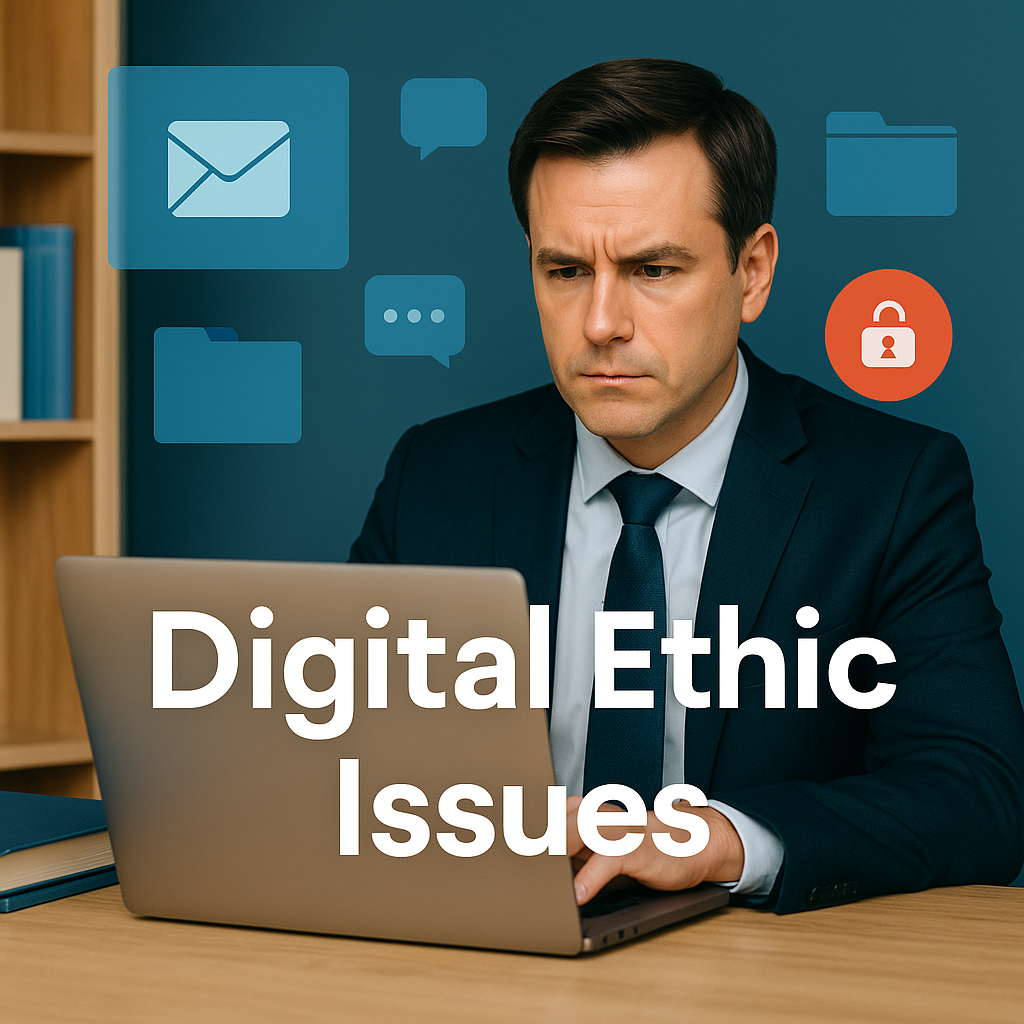
1. Email: The Ethics Scariest Movie of the 21st Century
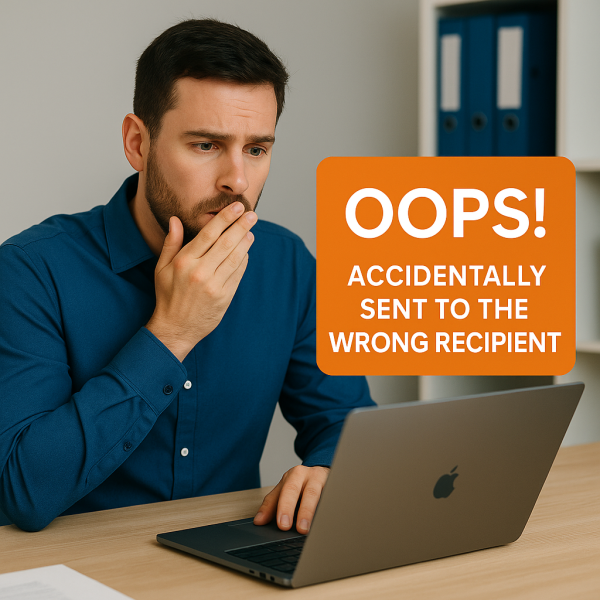 Email is the cockroach of legal communication. It will outlive us all, and it will embarrass us on the way out.
Here’s why email is an ethics nightmare:
- You can send a privileged document to opposing counsel at the speed of a single misplaced letter.
- Auto-fill thinks it knows who you meant, and it is often wrong.
- Attachments carry metadata containing every internal comment, revision, and late-night note you never wanted anyone to see.
- Reply-all remains a public menace.
The ethics rules say lawyers must avoid inadvertent disclosure.
Email says, “Hold my coffee.”
Solution? Not perfection — structure. Secure portals. Attachment warnings. And a culture that treats “double-check recipient” like a sacred ritual.
2. Working on Personal Devices: The Digital Equivalent of Leaving the File on a Park Bench
Most firms have a “no personal devices for client work” policy.
Most lawyers ignore it by lunchtime.
Phones, tablets, laptops, that old iPad someone gave you in law school — they’re all unencrypted doorways to client secrets.
Common sins include:
- Screenshotting documents and texting them to yourself
- Storing client notes in your Notes app sitting happily in the cloud
- Downloading a client PDF to your personal drive “just for a minute”
- Forwarding work to your personal email so you can “finish it on the couch”
Every one of these is a confidentiality problem dressed as convenience.
The ethical duty of technology competence doesn’t mean being an expert. It means not treating sensitive client information like you treat leftover takeout — forgotten and questionably stored.
3. Internal Oversharing: Because Not Every Matter Needs to Be a Firm-Wide Memo
 Law firms love to say “we’re collaborative.”
Sometimes that’s true. Sometimes it’s code for “everyone can access everything because no one set up the permissions correctly.”
The real confidentiality risks aren’t always external. They come from:
- Shared drives with universal access
- Teams and Slack channels with a thousand people in them
- Email chains that grow like weeds
- Paralegals, admins, or interns who can see matters they never work on
- Lateral hires inadvertently accessing information they were ethically walled from
Ethics rules don’t require full lockdowns.
They require reasonable steps to protect information.
“Reasonable steps” means role-based access.
It means “need to know” is not just something the CIA says in movies.
It means building digital walls that match your ethical walls — intentionally.
4. Metadata: The Ghosts of Drafts Past
Metadata is the legal world’s version of accidentally leaving your diary open on the kitchen counter.
Clients don’t realize it exists.
Opposing counsel hopes you forget it exists.
Lawyers pretend it doesn’t exist because dealing with it requires… effort.
Metadata can reveal:
-
Redlined comments you thought you deleted
-
Author names and internal reviewers
-
Prior versions of the document
-
The embarrassing filename you used at 2 AM
If you’ve never received a document with a filename like “ClientDraft_NO_ONE_SEE_THIS_v7_FINAL_FINAL_reallyFINAL.docx,” then congratulations — you don’t check metadata.
Cleaning metadata isn’t glamorous, but it is ethical.
It’s the digital equivalent of wiping fingerprints.
5. The Problem Behind the Problems: Lawyers Aren’t Trained for Digital Risk
 Most lawyers learned ethics in a classroom where the scariest technology was the projector.
But the modern law office runs on tools, systems, platforms, and apps that hold more client data than 30 filing cabinets ever could.
Yet the profession still treats technology as an afterthought:
- Passwords written on sticky notes
- No MFA because “it’s annoying”
- Wi-Fi networks named after pets
- Cloud services adopted with zero vendor vetting
- Security settings never touched after installation
Technology didn’t create ethics problems.
It amplified the ones lawyers already had:
Overconfidence, convenience, and habit.
What’s the Fix?
Not panic. Not banning technology. Not pretending you’ll remember to encrypt every email manually.
The fix is rethinking the small stuff.
Ethics isn’t a dramatic showdown.
It’s a thousand tiny choices that add up to either professionalism or digital chaos.
Firms don’t need high theory — they need:
- Secure defaults
- Smart workflows
- Basic training
- Proper access controls
- Vendor evaluations
- A healthier relationship with email
- A firm-wide understanding that tech convenience is not cost-free
This is where legal operations, security-minded vendors, and tech-forward service providers reshape practice norms.
The Big Picture
 Every tool lawyers use — email, chat, cloud storage, AI assistants, inboxes that would frighten an archaeologist — is part of their ethical footprint.
If a lawyer touches it, ethics touches it.
And now that the everyday tools are digital, ethical risks aren’t thunderclaps; they’re background noise.
This series is about turning down that noise.
In the next post, we’ll look at the technology that steals most of the headlines — AI — and why the real issue isn’t whether lawyers use it, but how they supervise it.
You have questions? Give us a call 415-284-2221 or fill out the firm below.