

1. “If It’s in the Shared Drive, It Must Be Safe” — The Myth of Internal Privacy
 Shared drives are the modern firm’s junk drawer:
Everything goes in, nothing comes out, and no one knows who put half of it there.
Typical shared-drive sins include:
- Folder structures that look like archaeological layers
- “Full access for everyone” permissions because it was faster
- Sensitive documents sitting next to lunch-and-learn handouts
- Entire client histories visible to anyone who can type the client’s name
Lawyers talk about confidentiality as if it’s a fortress.
But internally, many firms operate more like open-concept lofts: beautifully airy, catastrophically exposed.
The ethics rule is simple:
Confidentiality isn’t just about keeping outsiders out.
It’s about keeping insiders in the lanes they’re supposed to be in.
2. Over-Sharing: Collaboration Is Great… Until It’s Not
The legal profession loves cross-pollination.
Brainstorming. Collaboration. Reply-all chains that span six continents.
But “collaboration” often becomes “unintentional information sharing,” especially in digital channels like:
- Teams
- Slack
- Internal listservs
- Email groups
- Automatically synced folders
Modern communication tools are like dogs at a barbecue — they’ll run your information anywhere unless you put up a fence.
Internal access must match ethical boundaries.
If someone isn’t working on a matter, they shouldn’t be passively receiving updates, documents, or internal strategy debates.
Otherwise, you don’t have a collaborative culture.
You have a slow-motion ethics violation.
3. Lateral Hires: The Conflicts Time Bomb That Walks Through Your Door
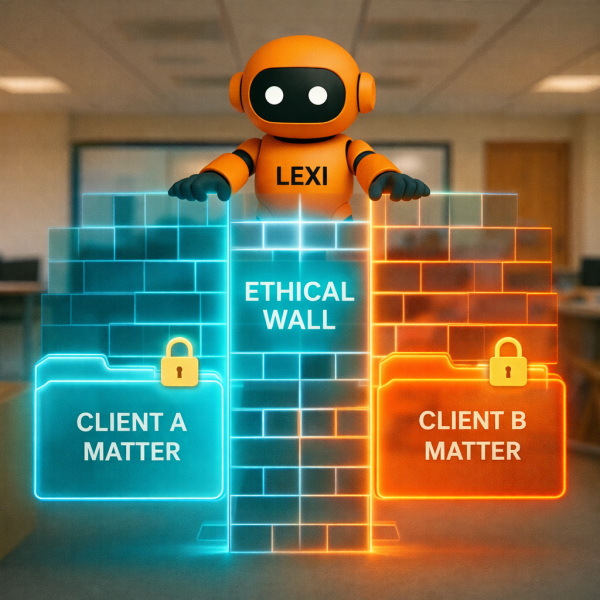 Laterals bring expertise, clients, and occasionally impressive coffee habits.
They also bring:
- Knowledge of former clients,
- Documents they shouldn’t have,
- Institutional secrets from their old firm, and
- A memory full of privileged information that can’t be unlearned.
When firms don’t handle conflicts and screening properly, laterals become walking conflict contagions.
Ethically, firms must:
- Identify matters that trigger conflicts
- Build functional walls (not theoretical ones)
- Restrict access to systems, not rely on good intentions
- Train the lateral and their new team on what must stay separated
- Document everything
Many firms do half of this.
Fewer do all of it.
Almost none do it before giving the lateral full login access on day one.
That’s how ethical contamination happens.
4. “Need to Know” Isn’t a Suggestion — It’s a Security Model
 Lawyers often interpret confidentiality as:
“Don’t talk about the case outside the firm.”
But confidentiality also means:
“Not everyone inside the firm should see everything.”
Ethically sound access is based on one simple rule:
If you don’t need the information to do your job, you shouldn’t have it.
This applies to:
- Associates
- Partners
- Paralegals
- Billing staff
- IT staff
- Summer interns who “just need to poke around the system”
- Chatbots or AI tools integrated into firm platforms
Not everyone needs everything.
But digital systems often behave as if they do.
The result?
Accidental exposure becomes inevitable.
5. Chat Tools: Where Information Goes to Stretch Its Legs
Slack, Teams, and internal messaging platforms are incredible productivity tools.
They are also:
- Searchable
- Loggable
- Forwardable
- Frequently misused as document repositories
- Full of screenshots no one was supposed to share
People treat chat like it’s ephemeral, like whispering in the hallway.
It isn’t.
It’s a permanent record with an excellent memory and no discernment.
If privileged content or client data is casually thrown into chat threads, the firm may have created a searchable vulnerability without realizing it.
And good luck deleting it — digital footprints don’t retire.
6. Training and Culture: The Soft Side of Hard Rules
Confidentiality failures aren’t usually malicious.
They’re cultural.
If the firm treats internal access casually, people behave casually.
If the firm never reviews access logs, no one thinks access matters.
If the firm encourages initiative without structure, employees take shortcuts.
Ethics rules don’t just regulate behavior.
They shape culture.
Or they should.
Firms need:
- Regular privacy training
- Clear policies that don’t require a PhD to understand
- Systems that enforce what policies claim to require
- Leaders who model good digital hygiene
- Processes that make the right thing the easy thing
Ethics lives in habits, not handbooks.
7. The Hard Truth: Law Firms Don’t Think of Themselves as Data Organizations
But they are.
Every modern law firm—whether two people or two thousand—is a data business wrapped in a service business.
And data businesses must manage access, movement, and retention with discipline.
Too many firms assume the only dangerous breach is an external hacker.
But bar regulators don’t care where the breach came from.
If client data escaped, you’re responsible.
Your biggest risk may not be outside intruders.
It may be the person sitting three desks away.
The Bottom Line
 Confidentiality isn’t breached by villains.
It’s breached by convenience.
Shared drives left wide open.
Email threads with too many eyes.
Chat channels with no boundaries.
Lateral hires onboarding too quickly.
Permissions that no one has reviewed in five years.
Technology didn’t invent these problems.
It just made them easier to accidentally create.
Internal confidentiality isn’t a wall.
It’s a discipline.
A mindset.
A system that must be designed, monitored, and respected.
Next Up: Post 5 — Cybersecurity as a Core Ethical Duty
Now that we’ve explored the internal cracks, it’s time to talk about the external threats that take advantage of those cracks.
Ransomware. Weak passwords. Remote work. MFA avoidance. Cloud misconfigurations.
Cybersecurity isn’t optional anymore.
It’s an ethics rule with teeth.
