
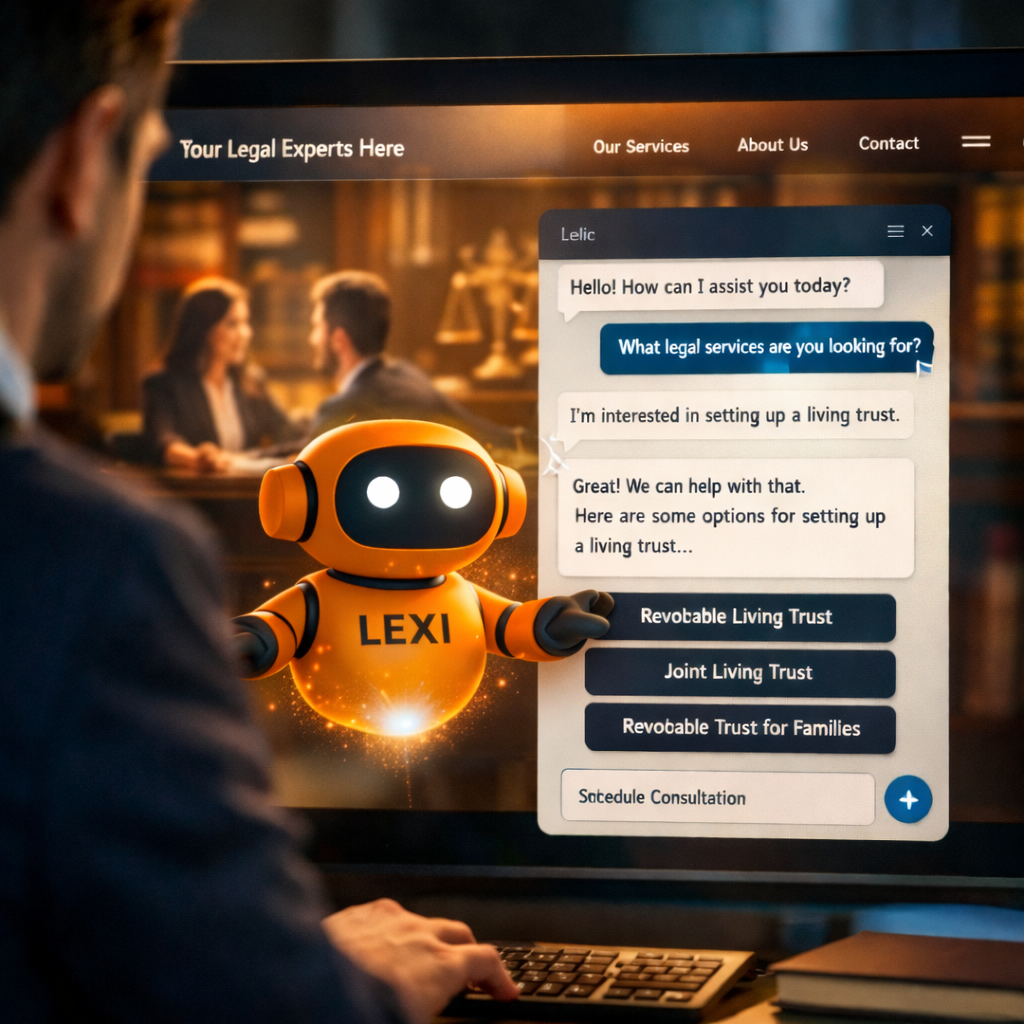
I envision an AI chat box on the home page that allows potential clients to ask questions about the firm in real time. Not a clunky chatbot that says, “I’m sorry, I didn’t understand that,” until the user gives up and hires somebody else. I mean an AI assistant that is actually trained on the firm’s own knowledge.
That training set matters. I would not want this tool freelancing across the internet and returning whatever it found after a digital walkabout. I would want it grounded in the firm’s approved content: blogs, articles, Q&A materials, conference transcripts, webinar recordings, presentation decks, intake scripts, and internal explanations that have been reviewed for use. A firm-specific dataset is cleaner, easier to supervise, more consistent with the firm’s voice, and safer than letting people rely on general-purpose tools that may create confidentiality and accuracy risks.
This is where the experience changes. A lead does not just land on a website and stare at practice-area tabs. The lead starts asking questions and getting usable answers. The AI can explain what the firm does, describe the kinds of matters it handles, and help the person understand whether the firm may be a match. That saves intake staff from repeating the same introductory information all day, and it means that by the time the lead gets on the phone, the conversation is already better informed.
It can also do something even more valuable. It can organize the handoff.
Once the AI identifies that there may be a fit, it should be able to book an appointment with an intake person. Then the intake person should receive a structured summary of what was collected during the chat: the practice area, the visitor’s basic issue, location, urgency, goals, any deadlines mentioned, and the questions the lead already asked. Instead of beginning every phone call with ten minutes of throat-clearing, the intake team starts with context.
Take an estate planning example. Imagine someone visits Janet’s Estate Planning Law Firm and types:
Prospective client: “Do you provide living trusts?”
AI assistant: “Yes, we help clients with living trusts and related estate planning options. Depending on your goals, we may recommend a simple trust plan, a broader trust-based estate plan, or an update to an existing plan. I can ask a few questions so our intake team can help point you to the best option.”
Prospective client: “I want to avoid probate and make sure my house is handled correctly.”
AI assistant: “Understood. I’ll note that for the team. Which state are you in, and do you already have a will or trust?”
Prospective client: “California. I have a will, but no trust.”
AI assistant: “Thank you. Based on that, an estate planning consultation looks like the right next step. I can help schedule a call and pass this information to our intake team.”
That is useful. That is fast. And most importantly, that is far more helpful than a generic form that says, “Name, email, message,” and then disappears into the intake void.
The bright line, of course, is that this tool should educate, qualify, and organize. It should not pretend to be the attorney of record. As a practical matter, that means a privacy notice, clear limits on what the tool is doing, supervision over its outputs, and a clean path to a human when the question turns into actual legal advice or a sensitive factual scenario. The ABA’s guidance makes clear that lawyers remain responsible for competence, confidentiality, communication, and supervision. Software does not get sworn into the bar.
To me, this is one of the most immediate AI use cases for law firms because it improves two things at once: client experience and internal efficiency. The AI does not replace intake staff. It removes the Groundhog Day part of their job so they can spend more time doing what humans do best, building trust, hearing nuance, and helping the right clients feel heard from the first real conversation.